You might think your toilet is clean, but the tank often hides grime you can’t see. Over time, mineral buildup, mold, and bacteria can accumulate, affecting not just the toilet’s performance but also your bathroom’s hygiene. Understanding how to clean this area properly can save you from unpleasant odors and costly repairs. Let’s explore the essential steps and supplies you’ll need to tackle this often-neglected task effectively.
Understanding the Importance of Cleaning Your Toilet Tank
Cleaning your toilet tank mightn’t be at the top of your to-do list, but it’s crucial for maintaining your bathroom’s hygiene and efficiency.
Over time, minerals, mold, and bacteria build up inside the tank, which can lead to unpleasant odors and even affect your toilet’s performance. Regular cleaning helps prevent clogs and ensures your toilet flushes properly.
Plus, a clean tank can extend the lifespan of your toilet by reducing wear and tear on internal components. You wouldn’t want to deal with unexpected repairs or a malfunctioning toilet, right?
Taking a little time to clean your toilet tank can save you money and hassle in the long run, keeping your bathroom fresh and functional.
What You’ll Need for the Cleaning Process
Before you dive into the cleaning process, it’s essential to gather the right supplies to make your task easier and more effective.
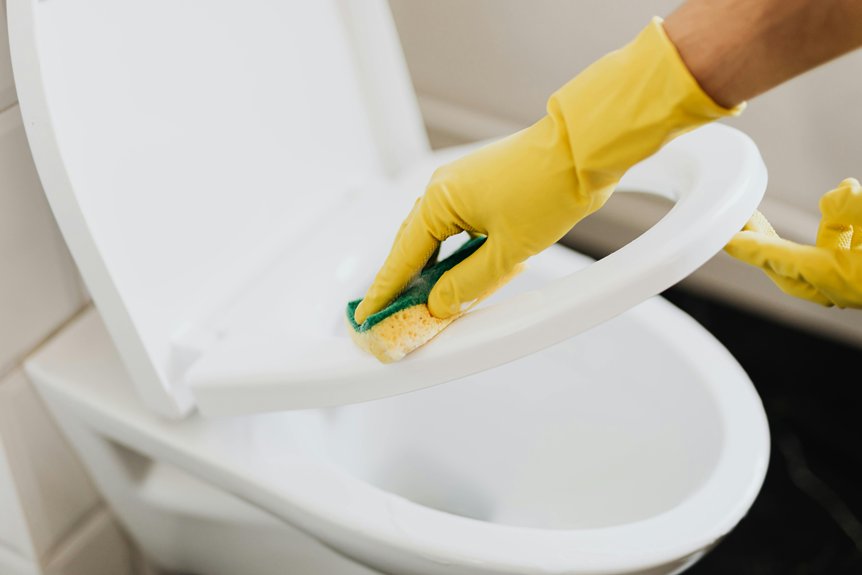
You’ll need a pair of rubber gloves to protect your hands from germs and chemicals. Get a sturdy scrub brush or an old toothbrush for those hard-to-reach spots.
You’ll also want a bucket to catch any excess water and a towel for drying surfaces afterward. For cleaning solutions, consider using a mixture of vinegar and baking soda or a store-bought toilet tank cleaner.
A sponge can be handy for wiping down surfaces, while a flashlight helps you see inside the tank clearly.
With these supplies on hand, you’re ready to tackle that toilet tank!
Step-by-Step Guide to Cleaning Your Toilet Tank
To clean your toilet tank effectively, follow these simple steps to ensure a thorough job.
First, turn off the water supply to the tank and flush to empty it.
Next, remove the tank lid and inspect for any debris. Use a sponge or cloth to wipe down the interior surfaces, focusing on the sides and bottom.
For tough stains, mix equal parts vinegar and water, applying it to the affected areas. Let it sit for a few minutes before scrubbing gently.
Rinse the tank with clean water by turning the supply back on briefly.
Finally, dry the lid and tank with a clean cloth before replacing the lid.
Regular cleaning helps maintain a hygienic toilet environment!
Common Issues Found Inside Toilet Tanks
Many homeowners overlook the interior of their toilet tank, but several common issues can arise that may affect its performance.
One major problem is mineral buildup, which can clog components like the flapper and fill valve, leading to inefficient flushing. You might also notice rust or corrosion, especially in older tanks, which can cause leaks or weaken parts.
Another issue is the accumulation of mold or bacteria, as damp environments promote growth. If you hear strange noises during flushing, it could signal worn-out components or air in the lines.
Lastly, you may find broken or loose parts, which can disrupt the toilet’s function. Regular checks can help you catch these issues early and ensure your toilet operates smoothly.
Preventative Measures to Keep Your Toilet Tank Clean
While regular cleaning might seem like a chore, taking a few simple preventative measures can keep your toilet tank in top shape and save you headaches down the line.
First, consider installing a toilet tank cleaner that releases cleaning agents with each flush. This can help minimize mineral buildup and stains.
Second, check your toilet’s water supply for impurities; using a water filter can make a significant difference.
Third, avoid flushing non-biodegradable items down the toilet, as these can lead to clogs and dirty tanks.
Lastly, inspect your toilet regularly for leaks or signs of wear, addressing any issues promptly.
Eco-Friendly Cleaning Solutions for Your Toilet Tank
If you want to keep your toilet tank clean without harming the environment, consider using eco-friendly cleaning solutions that are both effective and safe.
One great option is a mixture of vinegar and baking soda. Pour one cup of vinegar into the tank, followed by a cup of baking soda. Let it sit for about 30 minutes before scrubbing with a toilet brush.
For tougher stains, try using a diluted solution of hydrogen peroxide. Just mix equal parts water and hydrogen peroxide, apply it to the affected areas, and scrub gently.
You can also use essential oils, like tea tree or lavender, for a fresh scent and added antibacterial properties. These solutions aren’t only green but also budget-friendly!
Maintaining a Clean Toilet Tank: Tips and Tricks
To keep your toilet tank clean and functioning well, regular maintenance is key. Start by checking the tank every few months for any signs of buildup or leaks.
You can prevent mineral deposits by adding a few drops of vinegar to the tank every month. This not only keeps it clean but also helps with odors.
Remember to flush the tank and inspect the internal components periodically; replacing worn parts can save you money in the long run.
Additionally, consider using a tank cleaner tablet designed for this purpose, but use them sparingly to avoid damaging parts.
Finally, always keep an eye out for any unusual sounds or fluctuations in water levels—these can signal problems before they escalate.
Conclusion
Now that you know how to clean your toilet tank, don’t put it off any longer! Regular maintenance not only keeps your bathroom fresh but also prevents costly repairs. By following the steps outlined and using eco-friendly solutions, you’ll ensure your toilet functions efficiently for years to come. Remember, a clean tank means a healthier home, so make this task a priority in your cleaning routine. Your toilet—and your nose—will thank you!